Internal Concept
BounceReady
A pre-export loudness and compliance checker that turns platform-specific technical standards into a single pass or fail.

Project overview
Client
Internal Research
Industry
Audio Software
Role
Product Design & Build
Duration
1 Weekend
BounceReady began with a familiar frustration: a track sounds right in the DAW, then loses its punch the moment it's uploaded.
Spotify, YouTube, TikTok and SoundCloud each apply their own loudness normalisation, and the difference between a mix that survives that process and one that doesn't comes down to numbers most producers have never been taught to read LUFS, true peak, stereo correlation, sample rate.
BounceReady runs entirely client-side. Select a platform, drop in a file, and it listens to the track in the browser, checks it against that platform's real compliance targets, and returns a single pass or fail card.
Challenge
The technical knowledge already exists engineers have understood loudness standards for years. The problem was never the analysis. It was that the analysis is usually presented as raw numbers aimed at people who already know what those numbers mean.
The challenge was designing for the moment just before export: a point where a producer needs a clear answer, not a lesson in audio engineering, and needs to trust that answer enough to act on it in seconds.
Design Principles
Answer first, explanation second
The result is a single pass or fail state before anything else. Someone under deadline pressure shouldn't have to interpret a graph to know if their file is ready.
Borrow the language of the platform, not the engineer
Every check is labelled by what it means for the upload, "will this get compressed" rather than by its technical name. LUFS becomes context, not a headline.
Shareable as proof
The result is designed to be screenshotted. A pass card isn't just feedback, it's evidence a producer can send to a client or a label to confirm the file is ready.
Key Decisions
Platform-first selection
Choosing the destination before running any analysis means every subsequent number is judged against the right target, not a generic loudness standard. The interface makes the platform choice unmissable and impossible to skip.

Client-side processing
Running the analysis in the browser, with nothing uploaded to a server, removes the trust question entirely. No one has to wonder where their unreleased track is going.

The pass/fail card as the hero, not the footer
Most audio tools bury the verdict beneath the meters. BounceReady inverts that, the card is the largest, first thing you see, with the detailed breakdown available but secondary.
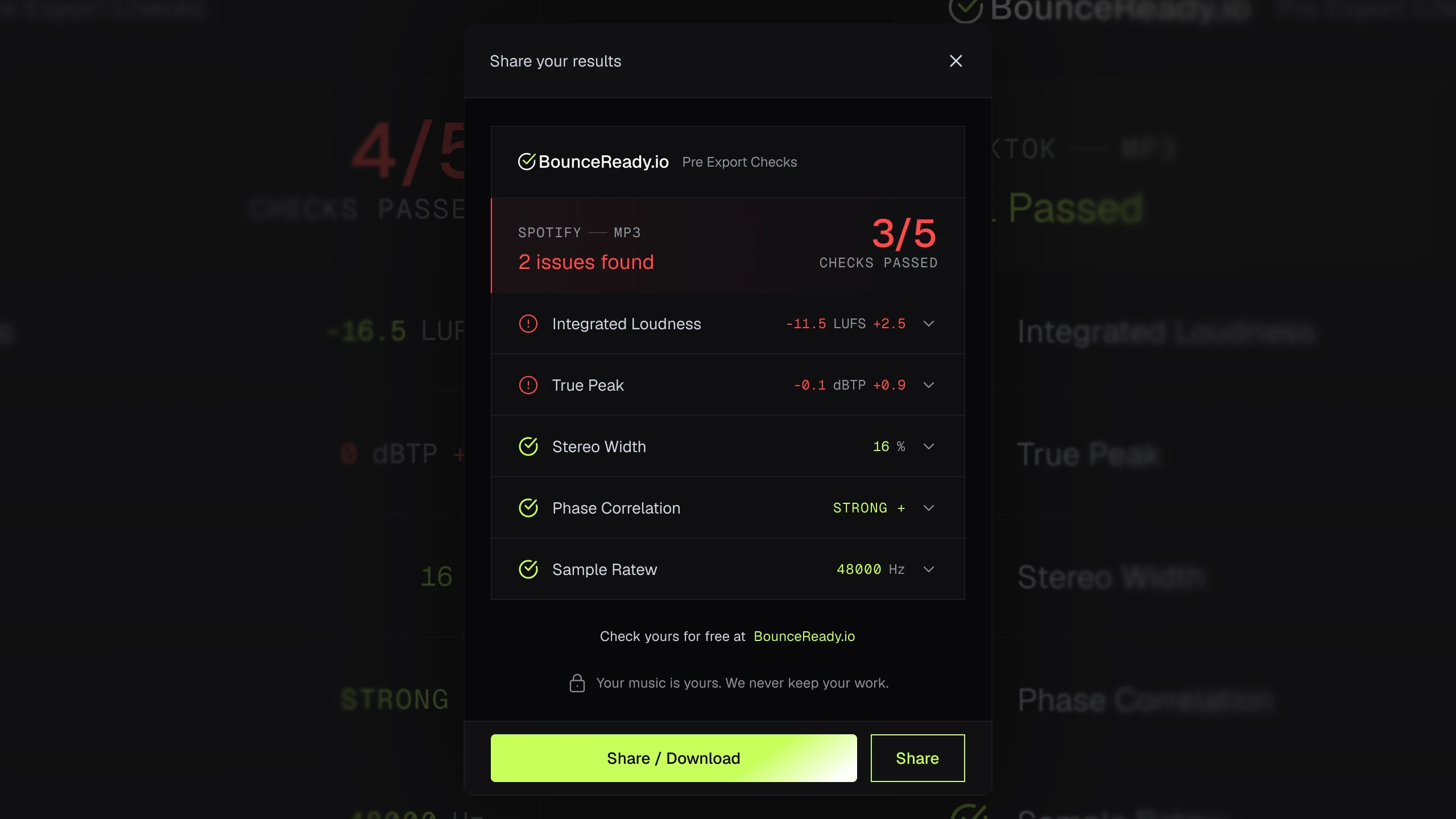
Free trial measured in exports, not days
Time-based trials punish people who are busy. Measuring the trial in exports means the free tier is genuinely useful whenever someone needs it, which builds trust before the upgrade decision.

Scaling the system
Verdict-first hierarchy
The system is built around one moment: the result. Pass and fail states own the strongest colour and largest type in the product, while the supporting metrics sit in a deliberately quieter register beneath. Everything else, platform tabs, file states, the upgrade flow stays neutral so the verdict is never competing for attention.

Outcome
BounceReady shipped as a working product, not a prototype — live, taking real payments from day one.
What Shipped
Client-side audio analysis engine
Platform-specific compliance profiles (YouTube, Spotify, TikTok, SoundCloud)
Pass/fail result card, designed to be shared
Subscription and trial-export billing flow
Framer landing page
Impact
Built and shipped in a single weekend
First paying customer within days of launch
Validated demand for a pre-export step most producers didn't know they needed
Reflection