Client Project
Headphone Lab
A professional headphone calibration and speaker-emulation tool designed to help producers make reliable mix decisions without relying on a treated studio.

Project overview
Client
Headphone Lab
Industry
Audio Software
Role
Product Design
Duration
1 Week
HEADPHONE LAB was designed around a simple challenge: most music producers don't mix in professionally treated studios, yet still need to make reliable mix decisions.
Working entirely on headphones introduces an unnaturally wide stereo image, inconsistent spatial perception and reduced confidence when judging balance, depth and translation. Professional monitoring environments solve these problems, but they're expensive, space-consuming and inaccessible for many producers.
The objective was to design an interface that made advanced headphone calibration and loudspeaker emulation approachable, allowing producers to trust their monitoring environment wherever they worked
Challenge
Audio calibration is technically complex. Crossfeed, room simulation, headphone correction and factory calibration all influence how sound is perceived, but exposing every parameter equally would overwhelm many users.
The challenge was balancing precision with confidence: helping producers make better mix decisions without requiring them to become experts in acoustics or psychoacoustics.
Design Principles
Confidence before configuration
Help users trust what they're hearing before asking them to adjust advanced parameters.
Visualise relationships, not settings
Present calibration, loudspeaker emulation and room simulation as parts of one monitoring workflow rather than isolated controls.
Expert depth without expert friction
Allow experienced engineers to fine-tune the system while keeping the primary workflow approachable for less experienced producers.
Key Decisions
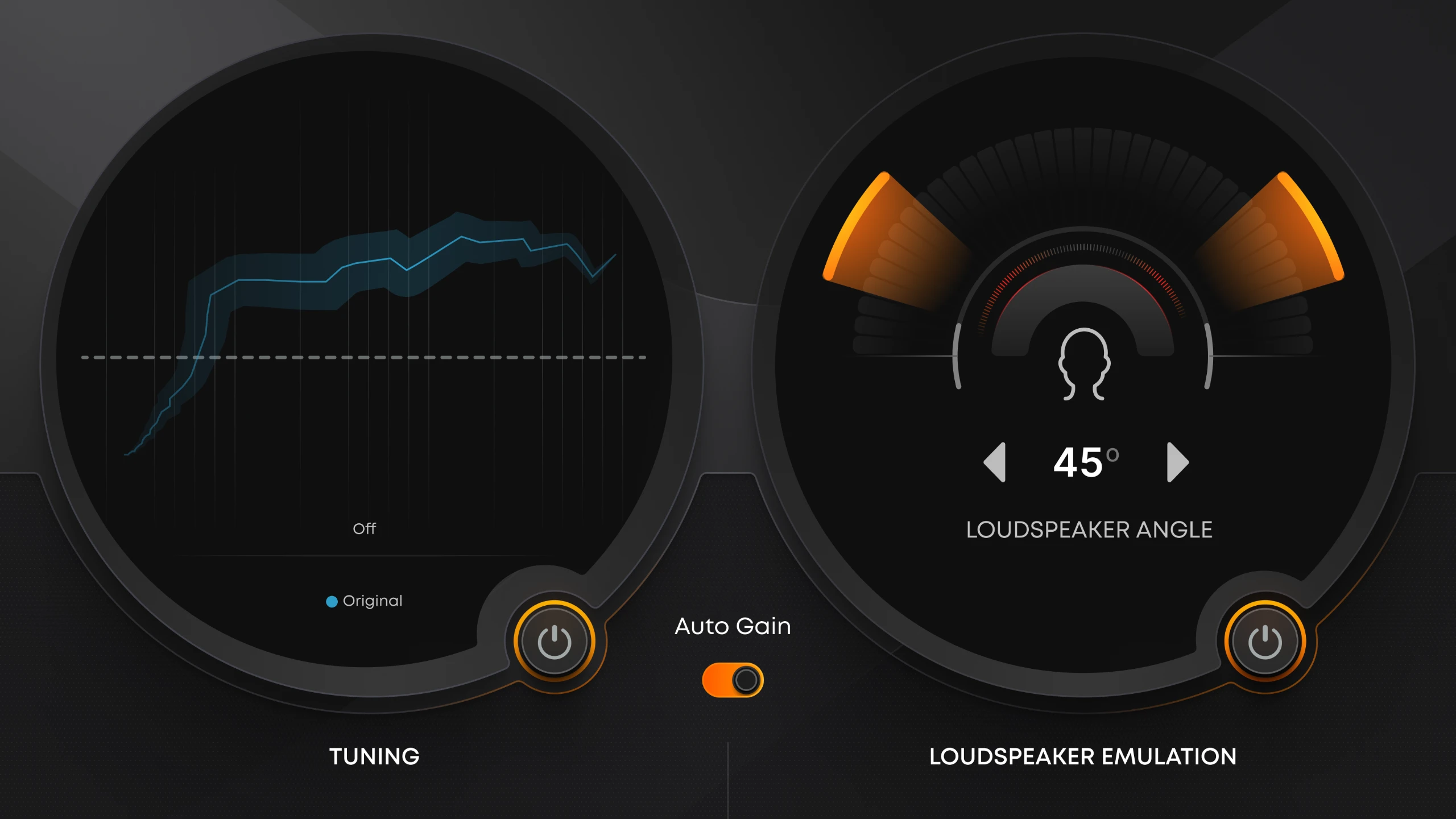
Separating calibration from monitoring
Rather than mixing all controls together, the interface clearly distinguishes headphone calibration from loudspeaker emulation, making each stage easier to understand.
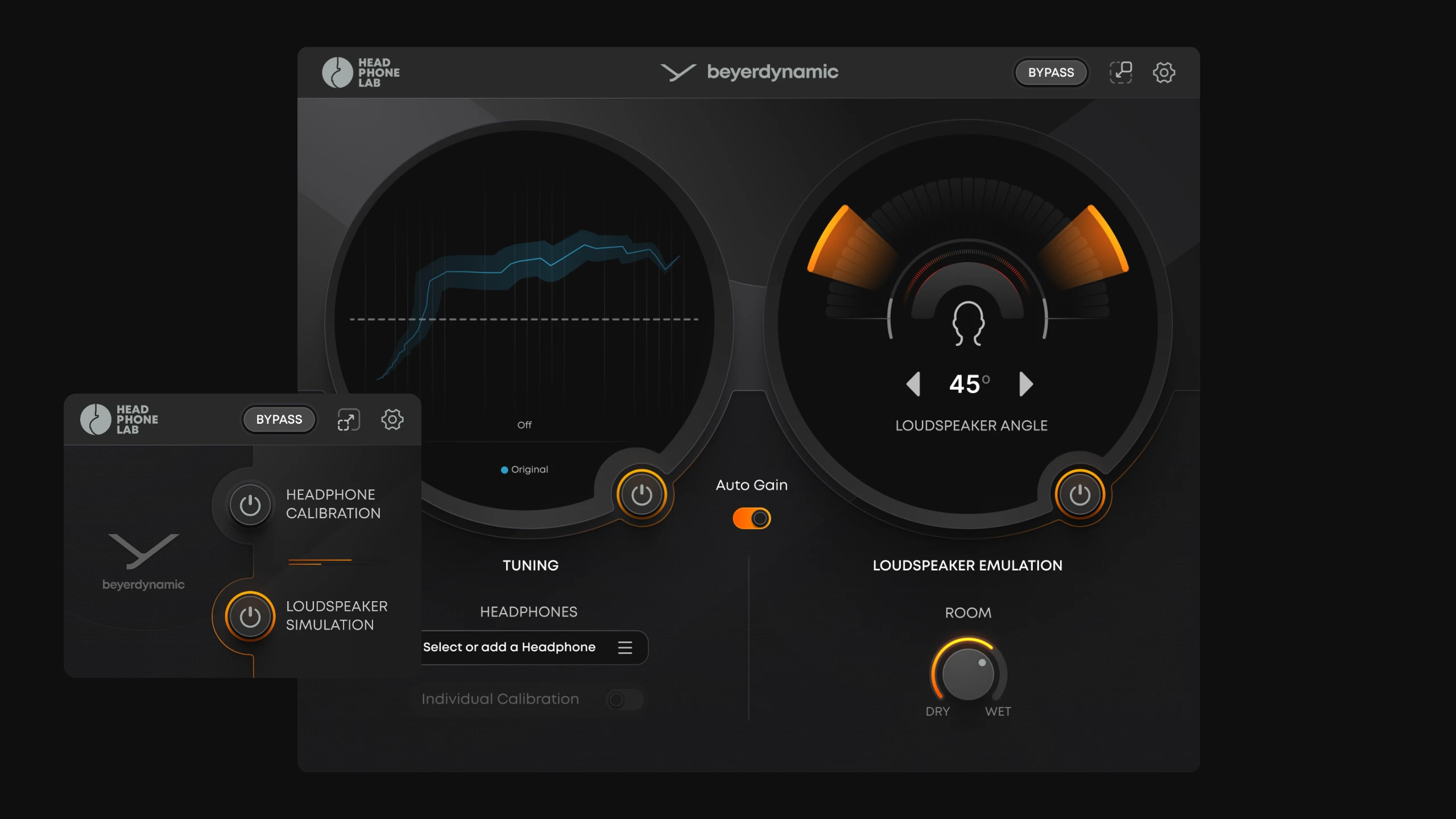
Progressive control
Advanced acoustic parameters remain available without dominating the primary workflow, allowing the interface to support both quick setup and deeper refinement.
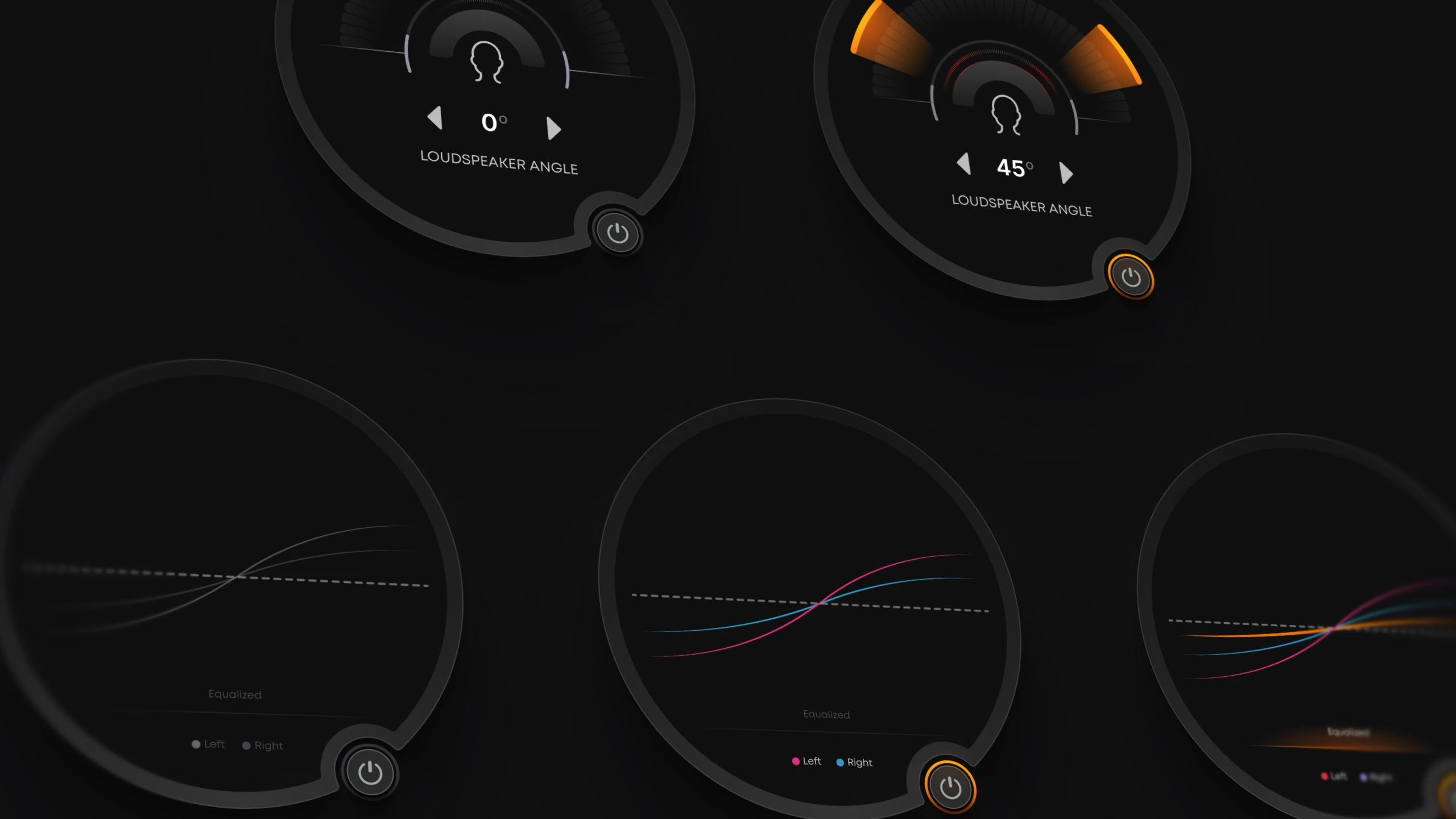
Immediate visual feedback
Graphs, meters and visualisation reinforce what the software is doing without forcing users to interpret raw acoustic measurements.
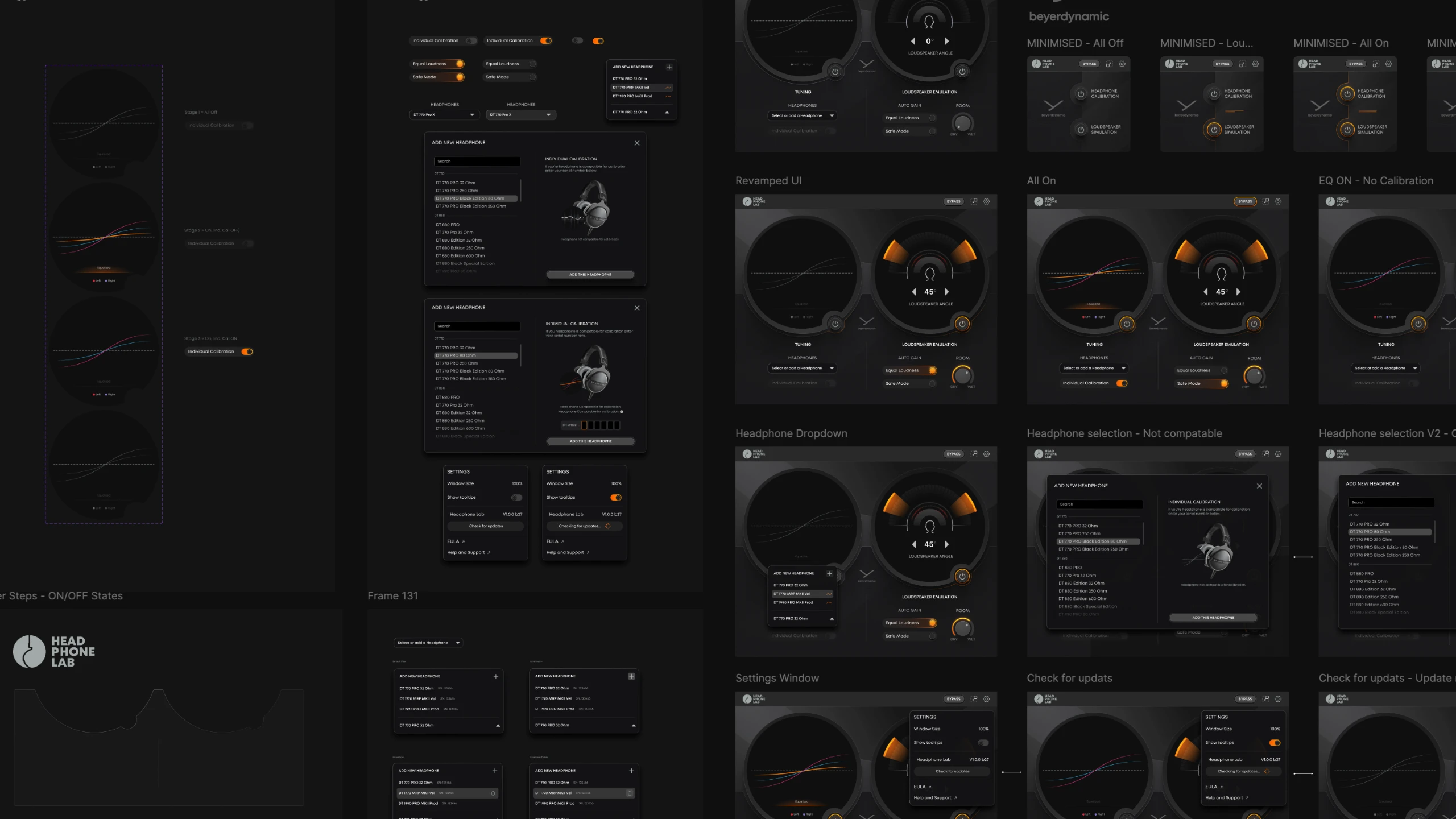
Scaling the system
Evolving a Consistent System
Developed alongside engineering over three iterative sprints, the system balanced consistency with evolution. User feedback shaped interaction refinements while the visual language remained anchored in beyerdynamic's established product identity.
Outcome
HEADPHONE LAB shipped as a commercial product forming part of beyerdynamic's professional audio ecosystem, helping producers achieve more reliable monitoring without requiring an acoustically treated studio
What Shipped
Complete desktop application interface
Calibration workflow
Loudspeaker emulation interface
Factory calibration workflow
Settings and onboarding experience
Impact
Commercial product launch
Used alongside compatible DT studio headphones
Demonstrated a simplified approach to complex monitoring technology
Part of beyerdynamic's professional production ecosystem
Reflection